With the right book and enough time, reading becomes a form of transportation, a deep river that carries me along in the current of words, characters, and ideas. Simply looking at the cover or hearing the title of certain favorite books evokes a place and a time and even remembered dialogue as if I had actually been present somewhere and was recalling the experience.
Because reading is so important to me, I used to read out loud to my kids every day when they were young. My grandkids can almost always count on a read-aloud whenever we’re together, and as a substitute teacher, I often carry picture books in my backpack—just in case. When I’m reading a chapter book aloud to a group of children and have to stop because of time, it’s my absolute joy to hear the groans and the request for “one more chapter.”
However, it has become clear to me that reading has fallen on hard times in recent years. The distractions of the digital age stand in the way of focused attention. Our social media skimming, our love for zippy memes, and online editors’ insistence on paragraphs with fewer than three sentences have rendered us unable to hold a substantive thought in our heads.
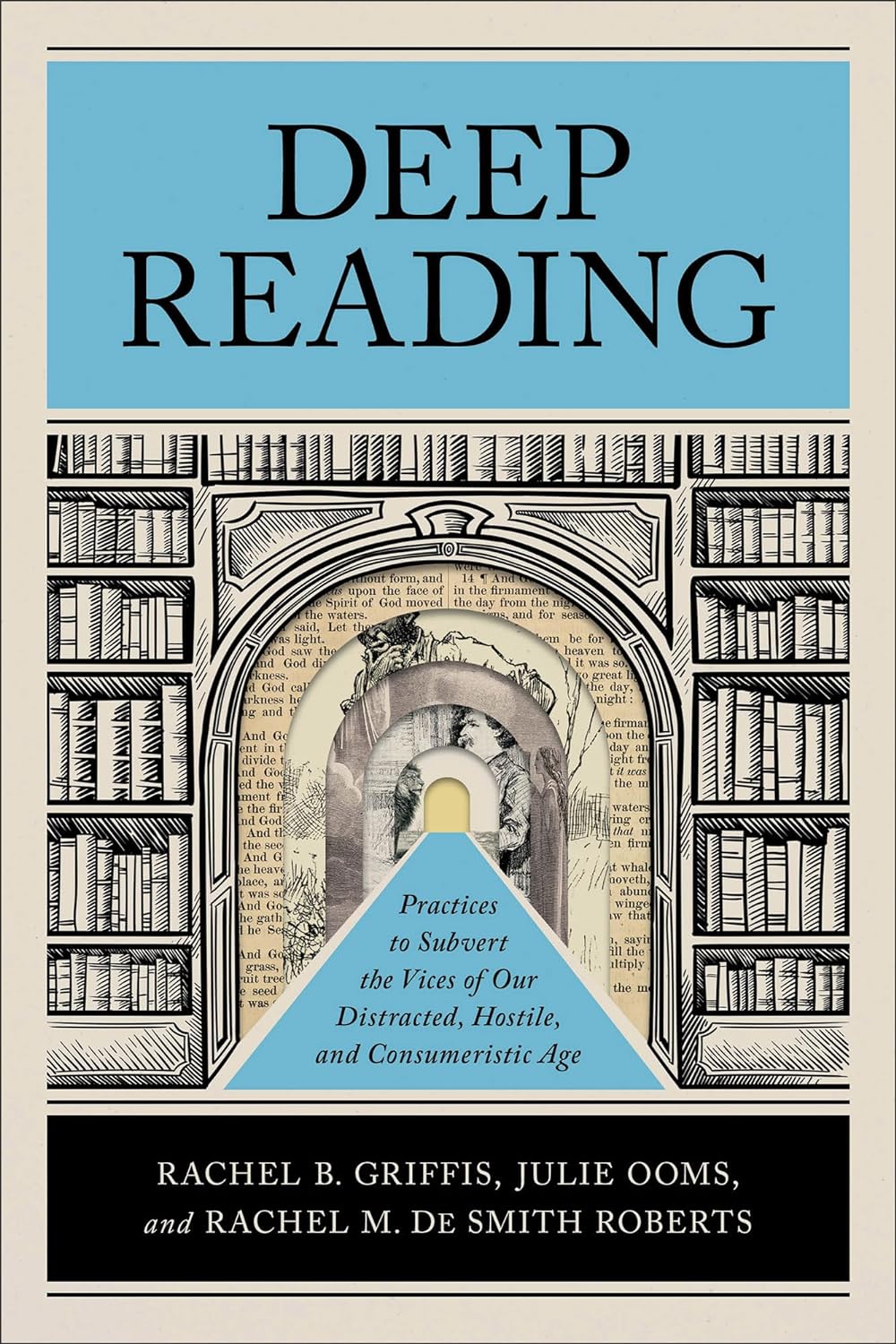
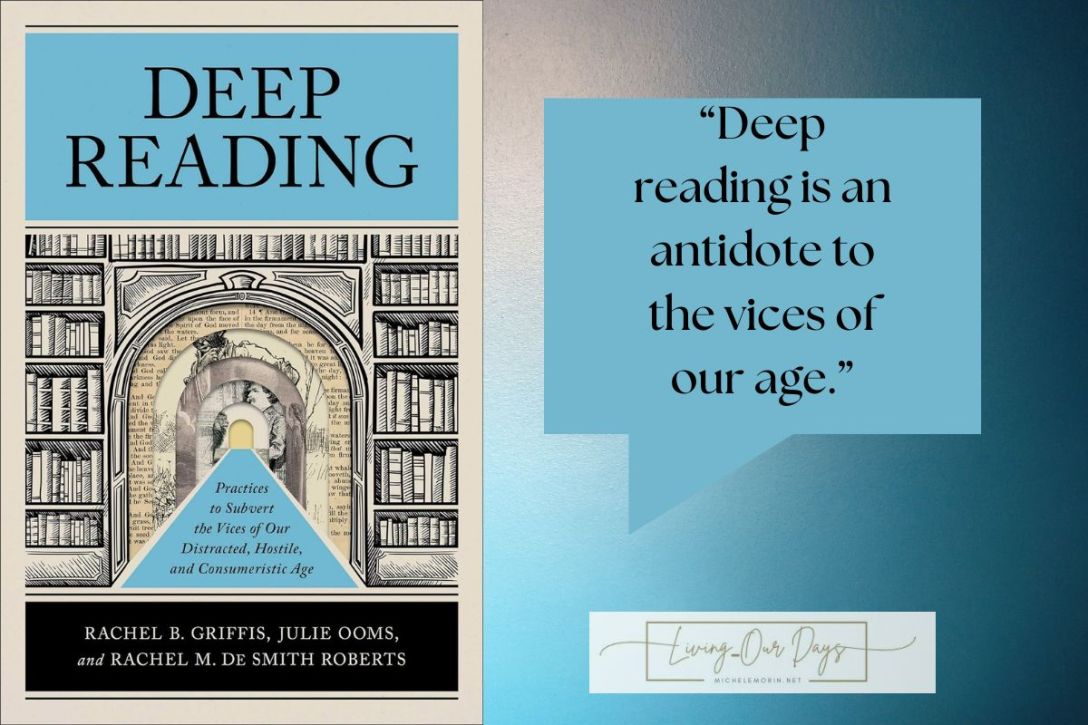
The team of authors behind Deep Reading lament this loss and push back with powerful practices to equip educators, students, and all readers for meaningful and formative reading experiences. They have managed to do this without pages and pages of recommended books, asserting instead that “deep reading practices… matter as much as what [we] read.”
While our cultural context promotes distraction, hostility, and a consumeristic approach to everything, deep reading promotes the virtue development that comes with a flourishing reading life. We read for leisure. We read because we are human, and there is delight to be found between the covers of a book.
We read for leisure. We read because we are human, and there is delight to be found between the covers of a book.
Tweet
Paying Attention
I was surprised to read the authors’ assertion that our distracted digital era is simply an amplification of a process that began with the Industrial Revolution. It certainly explains our addiction to efficiency and the glut of utilitarian self-help messaging.
One way to fight slippage into distraction is by reading deeply and well. T.S. Eliot described “the still point of the turning world,” a place of focused attention that may have to be learned (or relearned) through disciplined practices of attentiveness.
Listening Well
Reading builds empathy as we learn an expansive understanding and appreciation for a character or the author. Cultivating attitudes of humility and hospitality, readers learn to listen well—an antidote to hostility.
I especially appreciated the authors’ invitation to “listen with charity to texts from the past,” a sure defense against chronological snobbery. However, while I acknowledge the possibility that paying attention to worldview in our reading could lead to hostility in some readers, I would argue that it has the benefit of heightening discernment and encouraging the reader to identify the author’s presuppositions.
Reading for the Love of It
“Deep reading is an antidote to the vices of our age.” It’s impossible to put a dollar value on the intellectual development, the heightened empathy, or the focused attention that comes with deep reading. It’s my hope that healthy and robust conversations about books will be more highly valued, and that shared reading experiences will lead to deeper friendships and the tearing down of walls.
Reading that generates more questions than answers, that takes place on porches and in beach chairs is sure to produce a population of more joyful and less frantic souls.
Deep Reading was written by educators, and is, therefore, full of helpful information for promoting deep reading in the classroom. However, Christian readers of all professions will find a trustworthy guide for analyzing and interrogating their own reading practices and addressing any slippage or concessions to the culture they find there.
What Other Reviewers Are Saying
“The book not only instructs—it inspires.” —Karen Swallow Prior
“A wealth of creative and practical examples.” —Jeffrey Bilbro
Holding you in the light,
“Deep reading is an antidote to the vices of our age.” #deepreading via @BakerAcademic @ReadBakerBooks
Tweet

Free Encouragement in Your Inbox!
On the third Thursday of every month, I send a newsletter with biblical encouragement straight to my subscribers’ email inboxes. Frequently, I share free resources, and the newsletter is where everything lands first. I’m committed to the truth that women can become confident followers of God and students of his Word, and I want to help you along that path.
To add this free resource to your pursuit of biblical literacy, simply CLICK HERE. There, on Substack’s website, you’ll find a prompt that looks just like this image for Living Our Days with Michele Morin. Over on that site, simply enter your email and then click on the purple “SUBSCRIBE” button.
You’ll receive a welcome letter to confirm your subscription and monthly encouragement in your email inbox.

Looking for Challenging Devotional Reading that Encourages You to Seek Intimacy with God Every Day?

As you know, I’m committed to the truth that women can become confident followers of God and students of his Word, and it’s my goal to help you along that path. At Living Our Days, I provide biblical content and resources to encourage biblical literacy and faithful living, and now I’m sharing devotional content on the YouVersion app. Visit my profile page to get free access to the reading plans!
I participate in the Amazon Services LLC Associates Program, an advertising program designed to provide a means for sites to earn advertising fees. If you should decide to purchase any of the books or products I’ve shared, simply click on the image, and you’ll be taken directly to the seller. If you decide to buy, I’ll receive a few pennies at no extra cost to you.
Many thanks to Baker Publishing Group and NetGalley for providing a copy of this book to facilitate my review, which is, of course offered freely and with honesty.


 Living Our Days
Too true!
LikeLiked by 1 person
Yes, we’re swimming upstream…
LikeLiked by 1 person
I tend to read a lot of fiction these days just for fun so I understand the premise that we are missing out on going deep in our reading. I am balancing it out with non-fiction though because I find my mind still likes to be challenged. I just finished reading John Mark Comer’s book, Practicing the Way, which I highly recommend.
LikeLike
Practicing the Way was super convicting and so helpful.
And there’s not a thing wrong with reading fiction. Some of my deepest and most impactful reading experiences have been with fiction. There are some really gifted writers out there!
LikeLike
Oh I just love to read and reading aloud was always my favorite time of my teaching days (both in the classroom and while homeschooling). I read aloud to my boys until they were well into middle school and even then (even NOW!) we still listen to audiobooks together. It happens so rarely now but we used to pick a book to listen to on any vacation where we had a long car ride. My middle son and I were just talking about how we can get so immersed in the story we can lose sight of what is happening or being said right around us. Sadly my other two are not big readers at all but it’s been fascinating to hear all three of them describe what goes through their head as they read.
LikeLike
Interesting that you also have some big readers and some not so much. That’s also true here. With my youngest, we read the entire Ring Trilogy out loud. Such a great memory!
LikeLike
I’ve noticed my own capacity for deep reading has diminished. I find that I read best and longest when I have an actual physical book and can sit in silence without a phone or laptop nearby. Oh, the joys and distractions of the internet!
LikeLike
Yes, I am grateful for my very old Kindle Paperwhite that has zero notifications or connections to anything! Even so, I still prefer a real book..
LikeLike
I’m thinking that skim reading (which we easily embrace, in the interest of time) is like speed eating (also a habit among go-getters)–you pick up the dominant flavor perhaps, but the pleasure is short-lived. The deep reader enjoys the literary devices an author uses, the fore-shadowing, the characters’ personalities based on their words and actions, etc., similar to the slow eater who picks up on the nuances of many flavors and is able to savor his meal by taking his time. Deep reading (of quality literature) isn’t just an essential practice for a meaningful and formative experience, it provides sustenance for the soul.
LikeLike