Managing a chronic disease has surprising similarities to having a part-time job. There are things to be remembered and extra duties to perform. It’s part of one’s identity, but not in the same way a career would be.
Too, there’s a new vocabulary to be mastered, and, along with this, a very specific need for interpreting the question, “How are you?” Most of the time, it’s a throw-away phrase, the greeting Americans use reflexively. Increasingly, however, I’m finding that people ask with a sad look and a voice full of concern. In response to their kindness, I try to give an elevator-speech-length “state of the Parkinson’s address” that won’t leave them sorry they asked.
Mining this experience for all its worth, I’m discovering that the things we suffer can isolate us from the people we love. Your headache gets drowned out in my mind by the nagging alarm on my watch telling me to stop what I’m doing and swallow two small yellow pills. Or I can’t find the words to say, “I’m tired of this perpetual motion, the slowness, the stiffness,” so I dodge your question and change the subject.
This is the exact opposite of God’s intention for the measured and ordained afflictions that come to us all. Paul issues a corrective in my direction via his second letter to the church at Corinth:
Blessed be the God and Father of our Lord Jesus Christ, the Father of mercies and God of all comfort, who comforts us in all our affliction, so that we may be able to comfort those who are in any affliction, with the comfort with which we ourselves are comforted by God. For as we share abundantly in Christ’s sufferings, so through Christ we share abundantly in comfort too. If we are afflicted, it is for your comfort and salvation; and if we are comforted, it is for your comfort, which you experience when you patiently endure the same sufferings that we suffer. Our hope for you is unshaken, for we know that as you share in our sufferings, you will also share in our comfort.”
(2 Corinthians 1:3-7 ESV)
We were never intended to live in isolation, to suffer alone, or to find comfort apart from the deep understanding of the One who has “borne our griefs and carried our sorrows.”1
We were never intended to live in isolation, to suffer alone, or to find comfort apart from the deep understanding of the One who has “borne our griefs and carried our sorrows.”
Tweet
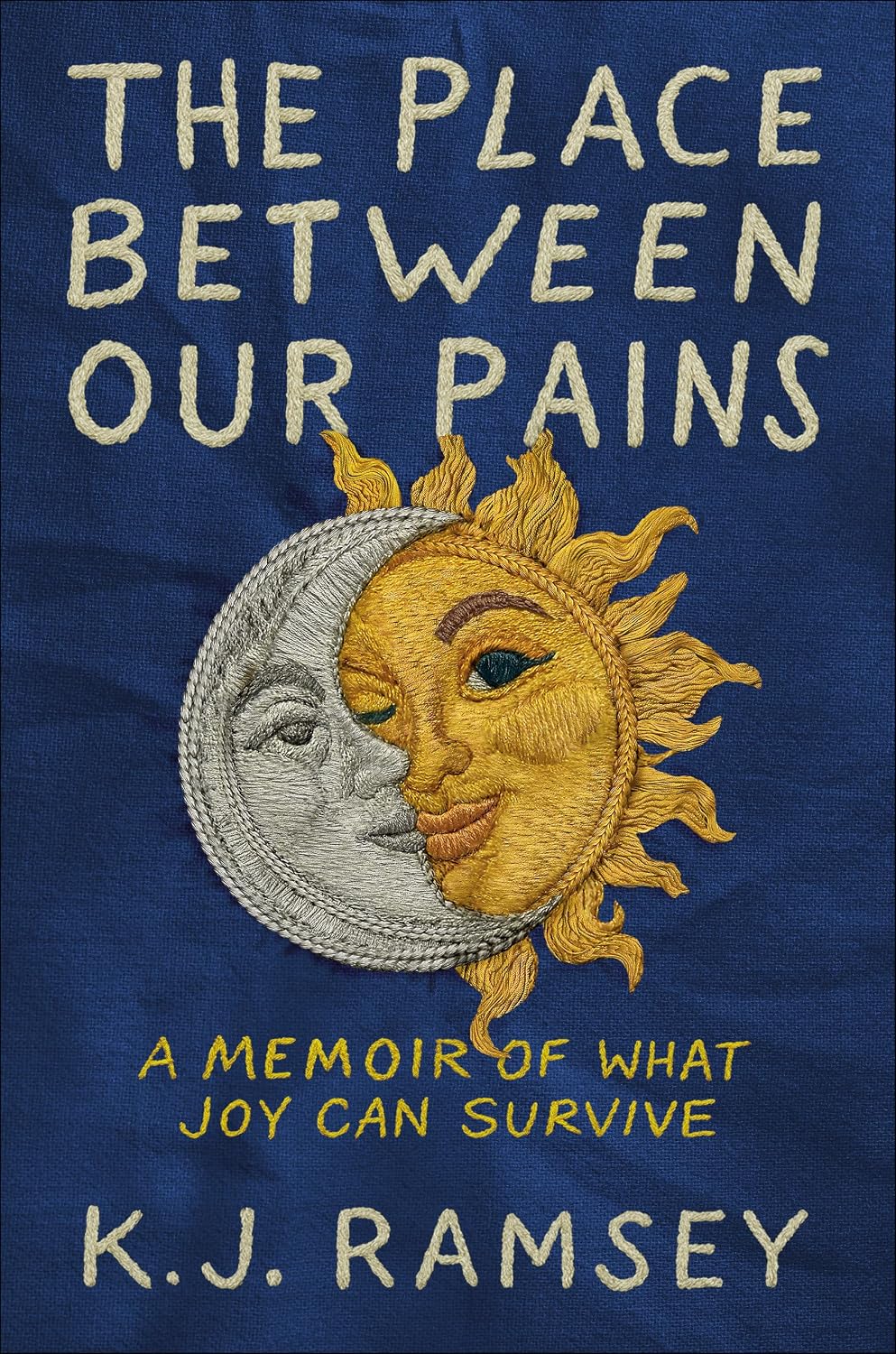
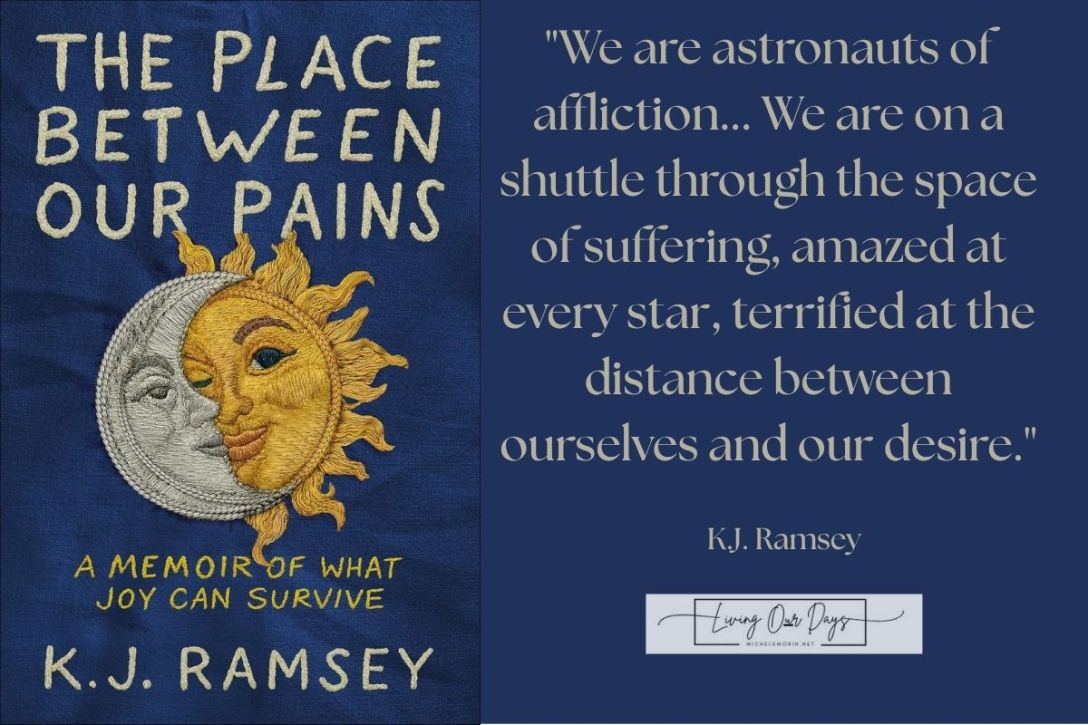
In The Place Between Our Pains, K. J. Ramsey frames the experience of chronic illness and the terror of being betrayed by her body. Suddenly struck down with an auto-immune disease that left her in constant pain and stole her mobility, she tried to process the estrangement she felt from her formerly strong and healthy self:
“We are astronauts of affliction… We are on a shuttle through the space of suffering, amazed at every star, terrified at the distance between ourselves and our desire.”
As a trauma therapist, Ramsey knew well that her survival and her future joy depended on her making peace with her grief. As a Christ-follower, she knew that God’s goodness and mercy would follow her forever, but life in the present moment, the medical emergencies, the continual setbacks and disappointments, and the debilitating effects of medical interventions that were supposed to be curative stood in the way.
With lyrical prose and wry humor, Ramsey’s memoir invites her readers to “practice resurrection,” even when the steps to the dance feel clumsy, and the music is hard to hear over the clamor of sadness or fear.
A note to readers: I was disappointed by the amount of profanity in the dialogue.
With lyrical prose and wry humor, @kjramseywrite ‘s memoir invites her readers to “practice resurrection,” even when the steps to the dance feel clumsy and the music is hard to hear over the clamor of sadness or fear. @ConvergentBooks
Tweet
Holding You in the Light,

- Isaiah 53:4 ↩︎
New for You on the Bible App!
This seven-day devotional plan affirms that perseverance is so much more than simply hanging on. Those who follow Jesus Christ are familiar with the dogged patience of waiting, because we have read the words of Scripture about eternal rewards for those who endure. So we persevere—sometimes just because God has commanded us to. When the newness wears off, when we don’t feel like it, when everything just feels too hard, we press on, and we press in to Christ. He is the prize.
As you know, I’m committed to the truth that women can become confident followers of God and students of his Word, and it’s my goal to help you along that path. At Living Our Days, I provide biblical content and resources to encourage biblical literacy and faithful living, and now I’m sharing devotional content on the YouVersion app. Visit my profile page to get free access to all the reading plans!
Have You Read the Latest Newsletter?
On the third Wednesday of every month, I send a newsletter with biblical encouragement straight to my subscribers’ email inboxes. Frequently, I share free resources, and the newsletter is where all the news lands first.
CLICK HERE to find me on Substack, where my goal is to help you on the path of becoming a confident follower of God and a student of His Word.

Disclosure: I am an Amazon Associate, which means that whenever you purchase a book I’ve shared here through the link I provide, I’ll receive a very small commission. It doesn’t cost you more, and I only share books here that I can wholeheartedly recommend.
Many thanks to Convergent Books and NetGalley for providing a copy of this book to facilitate my review, which is, of course, offered freely and with honesty.


 Living Our Days
Wonderful review and your thoughts spoke to my heart and brought encouragement this morning. May God continue to strengthen you, slow the progression, and use you mightily. Thank you!
LikeLiked by 1 person
Thank you, Joanne, for your kind words. You encourage me as well, and I appreciate your friendship.
LikeLike
I so understand and I pray for you. ❤️
LikeLike
That’s a true gift. Thank you.
LikeLike