Every week, we make thousands of decisions, some routine and some monumental. It almost always boils down to a simple yes or no—but for the person sitting in the hot seat, the call often seems anything but simple. Sensing a market to exploit, the internet overflows with books on decision making, oracle cards, and even yes/no wheels to help consumers completely randomize their decision-making process.
Often, the choice isn’t black or white. Scripture does not speak to the specifics of accepting ministry or business opportunities, whether to buy a particular house, or whether to homeschool your children. When the pro/con chart is perfectly balanced, friends are noncommittal, and it seems as if God is going to leave the choice up to us, a coin toss feels like the most reasonable next step.
Nevertheless, put the coin back in your pocket and take a breath.
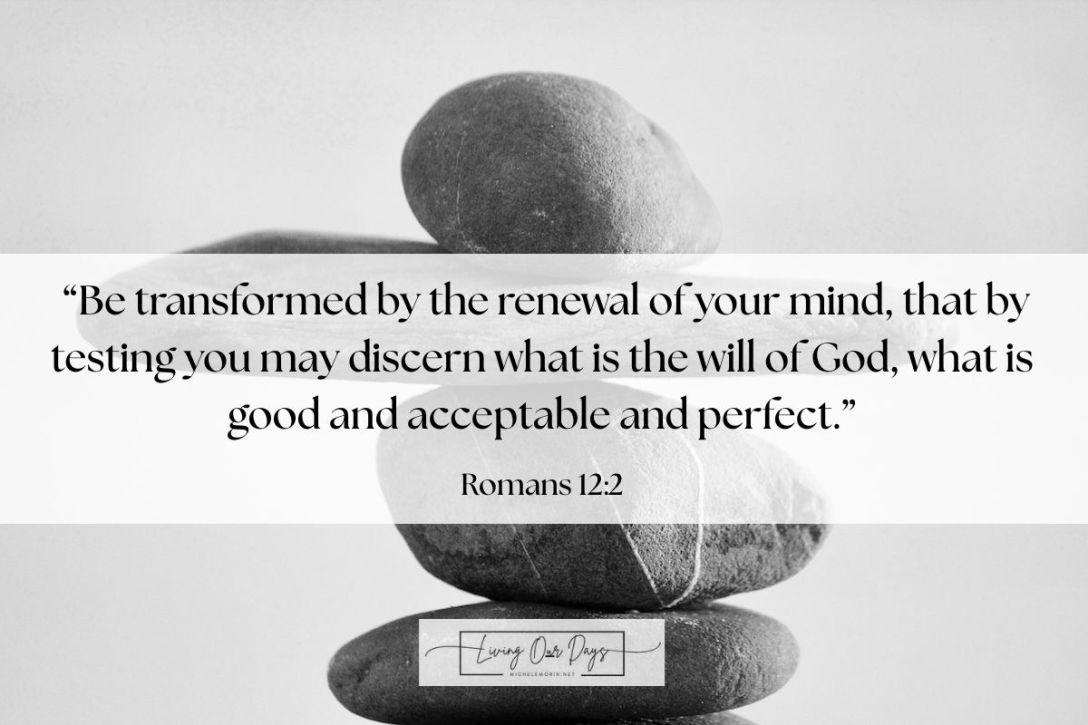
A well-placed yes or no requires wisdom, and for the believer, our first yes is always to the Lord. In Romans 12:2, Paul concluded that “by testing,” the renewed mind discerns God’s good, acceptable, and perfect will. If the only time we listen for God’s voice is when we’re making a decision, we might not even recognize its pitch or cadence when it comes.
Every week, we make thousands of decisions, both routine and monumental. It almost always boils down to a simple yes or no—but for the person sitting in the hot seat, the call often seems anything but simple.
Tweet
When Solomon advised his son, “Wisdom is the principal thing; Therefore, get wisdom.
And in all your getting, get understanding,” he had in mind a level of insight that would lead to maturity and godly living. God is not honored when we treat him like a Ouija Board or a Magic 8 Ball.
The spiritual practice of making good decisions has at its foundation a vital, seven-day-per-week relationship with God. Returning to Romans, Paul assumes that his readers will have handed themselves over to God as the only “reasonable” way to live, that they are in the process of being “transformed by the renewing of their minds.”
Clearly, this is spiritual work, and I may be the last person who should be writing about decision-making and the will of God. My track record includes agonizing over every used car purchase, and if the truth is told, there are days when I’m still pretty sure I picked the wrong college major. Certainly, my ears are open to solid advice for making choices, and I will happily share some of that distilled wisdom:
1. There are good noes and sacrificial yeses.
Reality here on the ground means that I will sometimes say yes to something that feels like a little death. I may not be especially gifted for it or excited about it, but I am a grown-up, and I can do hard things.
The flip side of this occurs when I say no to something that appears to be wonderful, but would get in the way of my primary responsibilities—or simply is not mine to do. Not all delightful options are an automatic yes, and not all distasteful options are an automatic no. Wise choices require discernment, self-knowledge, and sometimes even self-denial.
2. Decide on your non-negotiables in advance.
If you have decided in advance that you will not marry someone who doesn’t share your faith, should you form a close relationship with an unbelieving man?
If I have decided in advance that my family is my first priority, I’m going to be careful that ministry or career opportunities don’t consume all my time and energy.
If I’ve made a commitment to daily scripture and prayer, and it’s being crowded out by other things, it’s time to say “no” to something.
When the will of God is clear on a matter, and we insist on treating it on a case-by-case basis, we’re squandering emotional energy on decisions that could be filtered through a wiser grid. Too, when God has said, “Others can, but you may not,” we have our marching orders.
3. Sober judgment takes time to develop. You will make some mistakes.
We practice making decisions on “little” things. When we feel the Spirit’s nudge, we pay attention and send the gift card, make the phone call, or apologize to someone we’ve wronged. This strengthens our obedience muscle and teaches us to ask, “Does this prompting line up with the character of God?”
Small acts of obedience are preparation for bigger decisions that require more discernment. I’m still making mistakes, and I’m still learning from them. (And even if I did pick the “wrong” college major, God continues to be sovereign even over that misstep!)
4. Ask for input, feedback, and prayer.
Sometimes our families and friends know us and see us in ways that are oblique to us. While we have to avoid the temptation to make decisions by referendum, there is absolutely great value in the input of a trustworthy advisor.
5. Every yes is a no to something else.
We are finite creatures. Only God is omnipotent, omniscient, and omnipresent. Our phones may lead us to believe otherwise.
Several years ago, I made the decision to downsize my planner. (Yes, I still use a paper planner for all my appointments, my daily to-do list, shopping list, and even my blogging schedule.) When the small box of a day is full, I have to either postpone or say no to anything else.
An over-full schedule can feel very heroic and even exciting, but I’ve learned that when my calendar is too full, I start losing and misplacing things, and my nature defaults to being chronically impatient and short-tempered.
6. Make room for nuance whenever you make decisions.
There’s an internet aphorism making the rounds that goes roughly like this: “If it isn’t a clear yes, then it’s a clear no.” I wish life were that simple, but sometimes we have to weigh the situation or consider the context.
Even the writer of Proverbs was nuanced in his advice for handling interactions with a foolish friend. Proverbs 26:4 tells us:
Answer not a fool according to his folly, lest you be like him yourself.”
But wait! Read on to verse 5:
Answer a fool according to his folly, lest he be wise in his own eyes.”
So, do we answer or not?
Clearly, my right response will depend on who “the fool” is, the specific folly, and the nature of the relationship. God did not give us a black-and-white world, but he did send his Spirit into this world and into our hearts, carrying the gift of nuance and sweet reasonableness.
Do you have best practices to add to this list?
What decision-making wisdom is working for you in your “your sleeping, eating, going-to-work, and walking-around life”? I hope you’ll share it in the comments.
Thank you for accompanying me on this year-long deep dive into the meaning and purpose of wisdom. You can see all my Get Wisdom posts for 2025 here!
Holding You in the Light,

The spiritual practice of making good decisions has at its foundation a vital, seven-day-per-week relationship with God. Clearly, this is spiritual work.
Tweet

I’ve Got a New Plan for You on the YouVersion App
As you know, I’m committed to the truth that women can become confident followers of God and students of his Word, and it’s my goal to help you along that path. At Living Our Days, I provide biblical content and resources to encourage biblical literacy and faithful living, and now I’m sharing devotional content on the YouVersion app. Visit my profile page to get free access to all the reading plans!

Free Encouragement in Your Inbox!
On the third Thursday of every month, I send a newsletter with biblical encouragement straight to my subscribers’ email inboxes. Frequently, I share free resources, and the newsletter is where everything lands first.
CLICK HERE to read my most recent newsletter where you’ll be given the opportunity to subscribe. I’m committed to the truth that women can become confident followers of God and students of his Word, and I want to help you along that path.
I participate in the Amazon Services LLC Associates Program, an advertising program designed to provide a means for sites to earn advertising fees. If you should decide to purchase any of the books or products I’ve shared, simply click on the book title, and you’ll be taken directly to the seller. If you decide to buy, I’ll receive a few pennies at no extra cost to you.
Photo by Hennie Stander on Unsplash


 Living Our Days
What great advice! Thanks!
LikeLike
Such wise advice! I made some wrong decisions in my college years as well, but God has been faithful to redeem those. A lot of times wisdom in decision-making comes with practice and maturity, but God does tell us that if we lack wisdom to ask and he will provide all we need.
LikeLike
May we become ever more aware of God’s faithfulness and mercy as we continue to make decisions and trust him with the outcome!
LikeLike
I tend to overthink even the most mundane decisions so I’m trying to rely more on my gut… but I’m not nearly as good as saying yes to those things that might make me uncomfortable even though I am trying.
LikeLike
It feels risky, doesn’t it—as if maybe our “gut” is somehow biased in the wrong direction. My default is to do research until the amount of data I have actually gets in the way of making a decision!
LikeLike
I definitely dive into research too! In fact we have a family member that has MS and I’ve been reading up on that like crazy too… and I don’t even have to make any decisions about next steps!
LikeLiked by 1 person
Goodness! There’s so many nuggets of wisdom. I love that there are family members and friends who”know us and see us in ways that are oblique to us” – that went straight to my heart. You end with the nuance of decisions in the beautifully straight-forward and succinct way – and wisdom in between! Our decisions needing to be made don’t stop piling up as we grow older, do they! At least when you’re trying to finish the race strong – despite all the obstacles we find in the way. Our minister long ago gave some wise advice – if there’s no peace in a decision – there should be no decision. Decisions made to subdue fear are rarely the “right decision.” That bit of advise has diffused many time bombs!
LikeLike
I’ve heard the same advice—whether you do it or don’t do it, don’t let fear be the boss!
LikeLike
Sometimes we can pray faithfully about a decision and seek advice from mature Christians, but the answer still isn’t clear. Those are opportunities to step out in faith and experience God’s provision and guidance moment by moment while moving forward into the unknown. We can trust him to stop us if we start to go off course. One example: An opportunity presented itself for me to serve for six-months as a short-term missionary between high school and college. Should I go, or was it more important that I start college with my peers? I pursued the opportunity; God could have stopped the process any number of times. But the day did come when I boarded a plane and began the greatest adventure of my life.
LikeLike
Oooooh, how did I not know this detail from your story??
LikeLike
I love this concept that knowing God’s will isn’t just a matter of occasional big decisions, but an overall walking with Him moment by moment. These are all great tips, but the first one was eye-opening to me years ago.
LikeLike
I love the wisdom you have distilled for us here, Michele. When we were considering a move to a different state so my husband could take a new job, I shared with a mentor about our fear that we might be making a mistake even if it didn’t seem like we were. She wisely told me that if we, in good conscience, made what turned out to be a “wrong” decision, God wouldn’t abandon us there. There’s much more to this story, but the short version is that while things didn’t turn out the way we hoped in some areas, I believe the move was for the best. Remembering what she said helped during the rough patches.
LikeLike
This is true on so many levels and it’s so easy to second guess a decision that doesn’t lead to a “perfect” situation. But when is anything ever perfect??
LikeLike
I love your tips here, Michele. Making decisions in the fact of uncertain outcomes is never easy. May we continue to grow in wisdom!
LikeLike
That’s my goal and my prayer!
LikeLike
Hi Michele,
I enjoyed your thoughts in this post. Throughout my life I’ve always been very decisive (decisions come easy), until recent years.
Maybe life experience through the Holy Spirit’s wisdom has taught me that waiting is often a decision in itself to gain better understanding in what I’m dealing with that may need a yes or no.
We’re sitting beside each other this month at Lisa’s WOTY linky.
Blessings, Jennifer
LikeLike
Waiting is hard, but I think it’s our assignment sometimes. You are wise to see the importance of it.
LikeLiked by 1 person
Wonderful advice for wise decision making.
LikeLike
Thanks so much for reading!
LikeLike